70+ Walt Whitman Quotes The Greatest American Poet
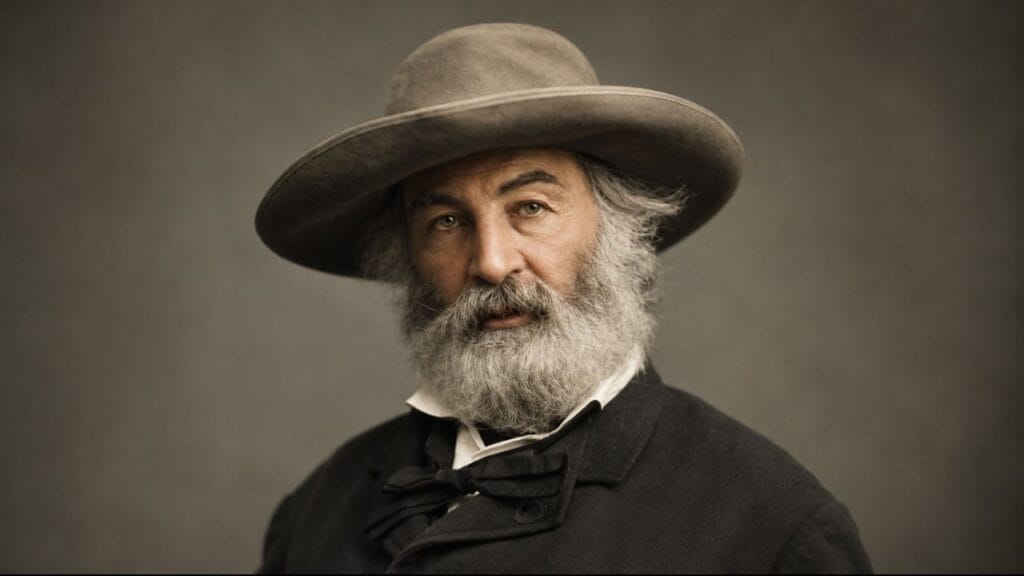
More than a century after his death, Walt Whitman quotes and poems continue to inspire people around the world. Through his poetry, he encouraged people to embrace their individuality, appreciate nature, and recognize the value of every human being.
Walt Whitman was an American poet whose work shaped modern American literature. Known as the Father of Free Verse, He changed poetry by writing in a more natural style instead of following traditional rules.
Over his lifetime, Whitman wrote nearly 400 poems and several books. Whitman spent more than 35 years revising and expanding his most famous poem, Leaves of Grass.
This collection of Walt Whitman quotes shares some of his best thoughts on life, nature, freedom, and self-discovery. Along with these Whitman quotes, you will find information about his early life, his famous works, and why he became such an important figure in American literature. Whether you are new to Whitman or returning to his work, these quotes offer lasting insights that still inspire readers today.
Who Is Walt Whitman?
Walt Whitman was an poet, essayist, journalist, and teacher. Whitman was born on May 31, 1819, in West Hills, Long Island, New York. He grew up in a working-class family during a time when the United States was still developing as a nation.
When Whitman was four years old, his family moved to Brooklyn. Because of financial difficulties, they lived in several different homes during his childhood. At the age of 11, he left school to help support his family. He first worked as an office boy for two lawyers.
Although Whitman had limited formal education, he loved reading and learning. Instead of relying only on school, he educated himself by reading books and exploring different ideas on his own.
As a teenager, Walt Whitman worked in printing shops and newspaper offices. These jobs taught him about publishing, writing, and the printing process. During this time, he became a regular visitor to local libraries, joined debating groups, and developed a strong interest in literature and theater.
Whitman also worked as a teacher in different Long Island schools for several years. However, he was not fully satisfied with teaching and later started his own newspaper, The Long Islander. Whitman managed every part of the newspaper himself, including writing, printing, and delivering it.
Whitman lived during an important period in American literature. He was part of two major literary movements: Transcendentalism and Realism.
Transcendentalism emphasized the power of the individual, nature, and spiritual growth, while Realism focused on portraying everyday life, ordinary people, and the realities of the world. You can see the influence of both movements in Walt Whitman’s work.
This unique blend shaped his poetry and made him one of the most influential writers in American literature.
Walt Whitman Famous Quotes
“Resist much, obey little.”
“What is that you express in your eyes? It seems to me more than all the print I have read in my life.”
“Keep your face always toward the sunshine – and shadows will fall behind you.”
“We were together. I forget the rest.”
“Not I, nor anyone else can travel that road for you. You must travel it by yourself.”
“Whatever satisfies the soul is truth.”
“You shall no longer take things at second or third hand, not look through the eyes of the dead, nor feed on the spectres in books. You shall not look through my eyes either, nor take things from me, you shall listen to all sides and filter them from yourself.”
“Happiness, not in another place but this place…not for another hour, but this hour.”
“I am as bad as the worst, but, thank God, I am as good as the best. ”
What Does This Quote Mean?
No one is completely good or completely bad. We all have flaws, but we also have value and goodness within us.
“Peace is always beautiful.”
“I do not ask the wounded person how he feels, I myself become the wounded person.”
What Does This Quote Mean?
Walt Whitman believes that understanding someone’s pain requires more than just asking how they feel; it means imagining yourself in their situation. When we put ourselves in someone else’s shoes, it becomes easier to understand what they are going through and feel connected to them.
“These are the days that must happen to you.”
“My words itch at your ears till you understand them”
“re-examine all you have been told in school or church or in any book, and dismiss whatever insults your own soul.”
“I am larger, better than I thought; I did not know I held so much goodness.”
“Battles are lost in the same spirit in which they are won.”
What Does This Quote Mean?
Qualities that lead to success can also lead to failure. Confidence, determination, and boldness can help people achieve great things. However, they can sometimes cause overconfidence, recklessness, or stubbornness.
“The real war will never get in the books.”
“The future is no more uncertain than the present.”
“Nothing can happen more beautiful than death.”
“I wear my hat as I please, indoors or out.”
“He can make every word he speaks draw blood,”
For more meaningful and unforgettable quotes, explore our collection of Oscar Wilde Quotes. One of the most famous Irish poets and playwrights.
Walt Whitman Quotes On Life
“Of Equality, as if it harm’d me, giving others the same chances and rights as myself, as if it were not indispensable to my own rights that others possess the same.”
“And whoever walks a furlong without sympathy walks to his own funeral drest in his shroud.”
“You must habit yourself to the dazzle of the light and of every moment of your life”
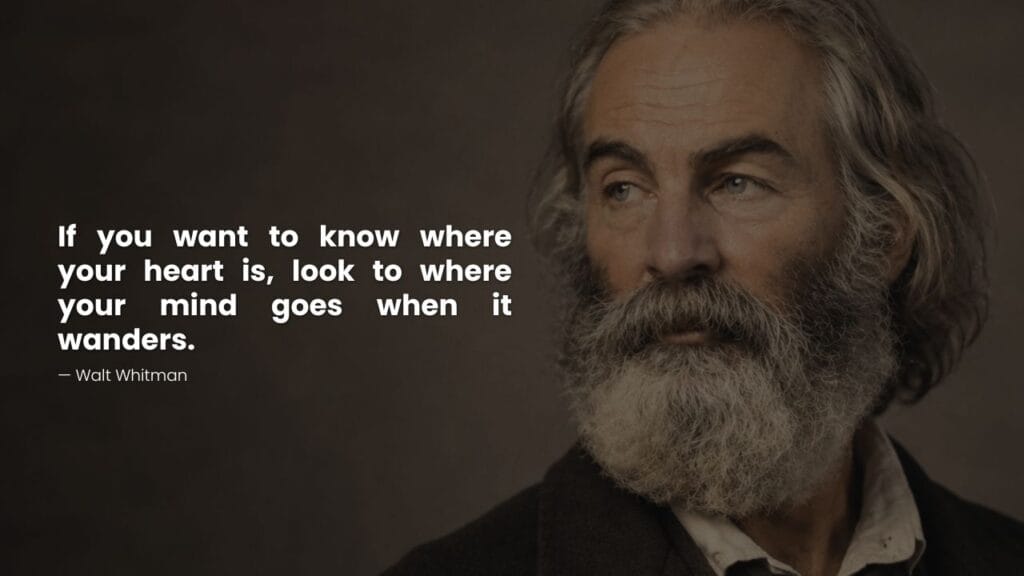
“If you want to know where your heart is, look to where your mind goes when it wanders.”
“Thought Of obedience, faith, adhesiveness; As I stand aloof and look there is to me something profoundly affecting in large masses of men following the lead of those who do not believe in men.”
“What will be will be well — for what is is well, To take interest is well, and not to take interest is well.”
What Does This Quote Mean?
When you accept life as it comes, you can find real peace and freedom. No matter if things seem good or bad right now, they usually end up fitting into a bigger picture.
You can throw yourself into life with passion and curiosity, or you can choose to step back and stay calm. Both ways are valid, and there is no single right way to respond.
The earth remains jagged and broken only to him or her who remains jagged and broken.”
What Does This Quote Mean?
The world around us often acts as a mirror for whatever is happening inside our own mind and heart. When a person is full of bitterness, anger, or pain, everything around them looks harsh, cruel, and broken.
“A heroic person walks at his ease through and out of that custom or precedent or authority that suits him not.”
“no matter what, shall come forth something to make a greater struggle necessary.
“Studying life, eh! Let him take care, studying human life is looking at the stars. If you look too close, there is a dazzle.”
“There was never any more inception than there is now, Nor any more youth or age than there is now; And will never be any more perfection than there is now, Nor any more heaven or hell than there is now.”
“It seems to me that everything in the light and air ought to be happy, Whoever is not in his coffin and the dark grave, let him know he has enough.”
What Does This Quote Mean?
Just breathing in fresh air and feeling the sun is already something to be thankful for. Being alive and able to walk this earth is a gift, but many people often take granted while chasing after more things.
Even when life feels hard, being alive is the greatest treasure. Life offers plenty of beauty and chances to find happiness and peace.
“There is no object so soft but it makes a hub for the wheeled universe.”
What Does This Quote Mean?
Even the smallest things in nature play an important role in the universe. Everything has value because everything is connected. A fragile leaf or a blade of grass has its own part to play, helping keep the world in balance.
If you take away even the smallest detail, it can affect everything else. Greatness and value can be found in the simplest things around us.
“The memory of a particular image is but regret for a particular moment, and houses, roads, avenues are as fugitive, alas, as the years.”
“It is not they who give the life, it is you who give the life.”
Whitman Quotes About Self
“A simple separate person is not contained between his hat and his boots.”
What Does This Quote Mean?
When Walt Whitman says someone is not “contained between his hat and his boots,” he means that a person is more than just their physical appearance or body. People have thoughts, feelings, imagination, and a unique spirit that cannot be seen from the outside.
“Each of us inevitable, Each of us limitless—each of us with his or her right upon the earth, Each of us allow’d the eternal purports of the earth, Each of us here as divinely as any is here.”
“There was a child went forth every day, And the first object he looked upon, that object he became.”
“Henceforth I ask not good fortune. I myself am good fortune.”
What Does This Quote Mean?
Walt Whitman shows confidence in himself rather than relying on luck or external circumstances. He believes that people create their own opportunities through their attitude and choices. Rather than waiting for life to bring him success or happiness, he takes responsibility for creating them himself.
“Oh while I live, to be the ruler of life, not a slave, to meet life as a powerful conqueror, and nothing exterior to me will ever take command of me”
“Simplicity is the glory of expression.”
“Let your soul stand cool and composed before a million universes.”
“I do not trouble my spirit to vindicate itself or be understood”
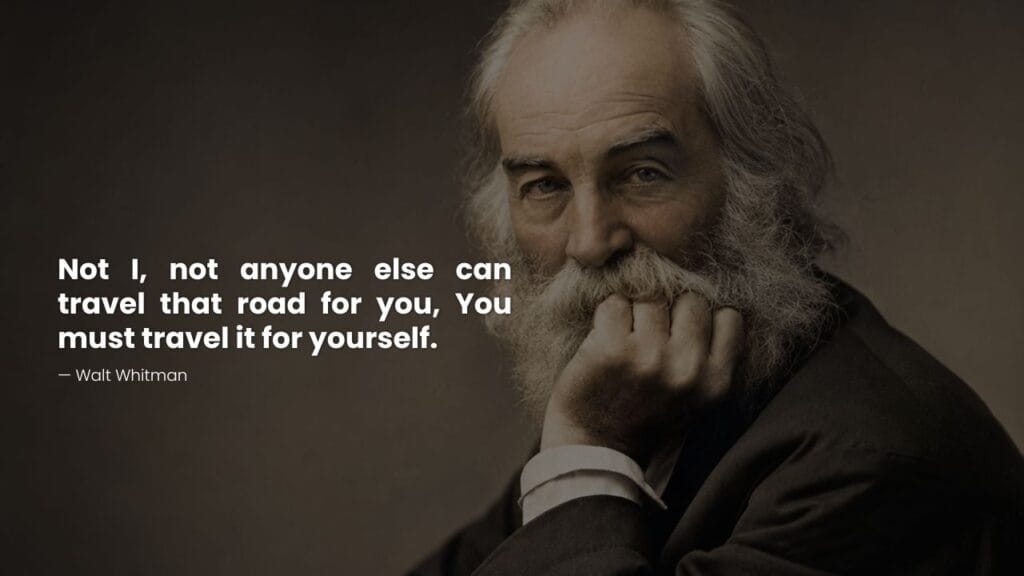
“Not I, not anyone else can travel that road for you, You must travel it for yourself.”
“Whoever denies me it shall not trouble me, Whoever accepts me he or she shall be blessed and shall bless me.”
“He most honors my style who learns under it to destroy the teacher.”
“Either define the moment or the moment will define you.”
“I celebrate myself, and sing myself, And what I assume you shall assume, For every atom belonging to me as good belongs to you.”
“I resist any thing better than my own diversity, Breathe the air but leave plenty after me, And am not stuck up, and am in my place.”
What Does This Quote Mean?
Walt Whitman values his unique identity and refuses to give up the diversity of thoughts, experiences, and qualities that make him who he is. He also believes in living fairly and leaving enough for others. He feels comfortable with who he is and where he stands in life.
You can also explore our Clara Barton Quotes, known as the angel of the battlefield, for more inspiring quotes.
Walt Whitman Love Quotes
“I am to wait, I do not doubt I am to meet you again, I am to see to it that I do not lose you”
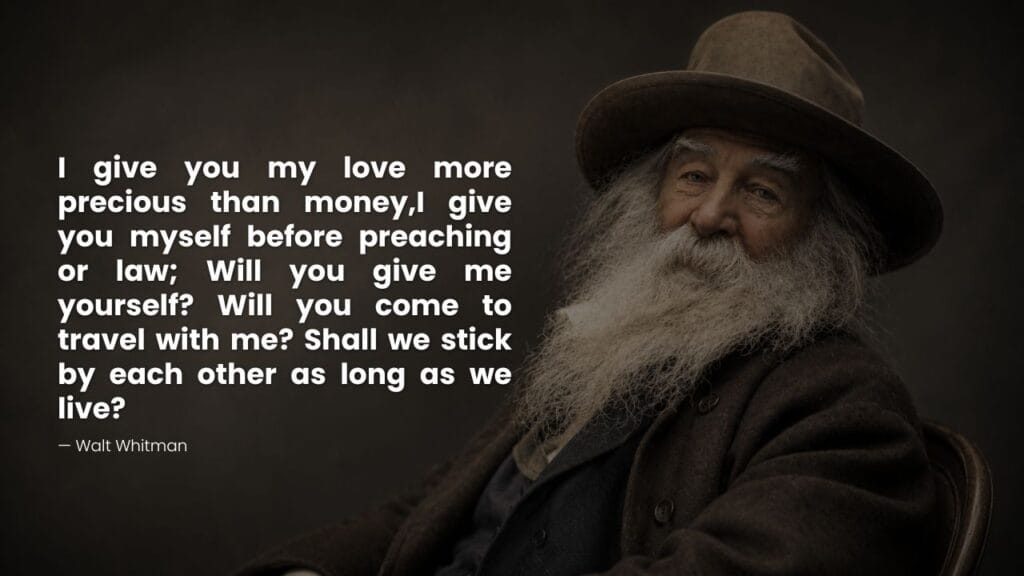
“I give you my love more precious than money, I give you myself before preaching or law; Will you give me yourself? Will you come to travel with me? Shall we stick by each other as long as we live?”
“When I give, I give myself”
“In the confusion we stay with each other, happy to be together, speaking without uttering a single word.”
“what is that you express in your eyes? It seems to me more than all the print I have read in my life.”
“Of all the earth her heart most full of sorrow because most full of love.”
“I have loved many women and men, but I love none better than you.”
“For the one I love most lay sleeping by me under the same cover in the cool night, In the stillness in the autumn moonbeams his, face was inclined toward me, And his arm lay lightly around my breast – and that night I was happy”
“For who but I should understand love, with all its sorrow and joy?”
“We were together, I forget the rest.”
“Uttering joyous leaves all its life without a friend a lover near, I know very well I could not.”
“To drive free, to love free, to court destruction with taunts. One brief house of madness and joy!”
“Your breath falls around me like dew”
You might enjoy our collection of Maya Angelou Quotes. She is one of the most influential voices in American literature.
Walt Whitman Quotes About Death
“And as to you life, I reckon you are the leavings of many deaths, No doubt I have died myself ten thousand times before.”
What Does This Quote Mean?
Walt Whitman sees life and death as parts of a continuous cycle, not as total opposites. When he calls life the “leavings of many deaths,” he means that new life often grows out of what has ended.
When he says he has “died myself ten thousand times before”, he is speaking metaphorically about the many changes, losses, and transformations that shape a person throughout life.
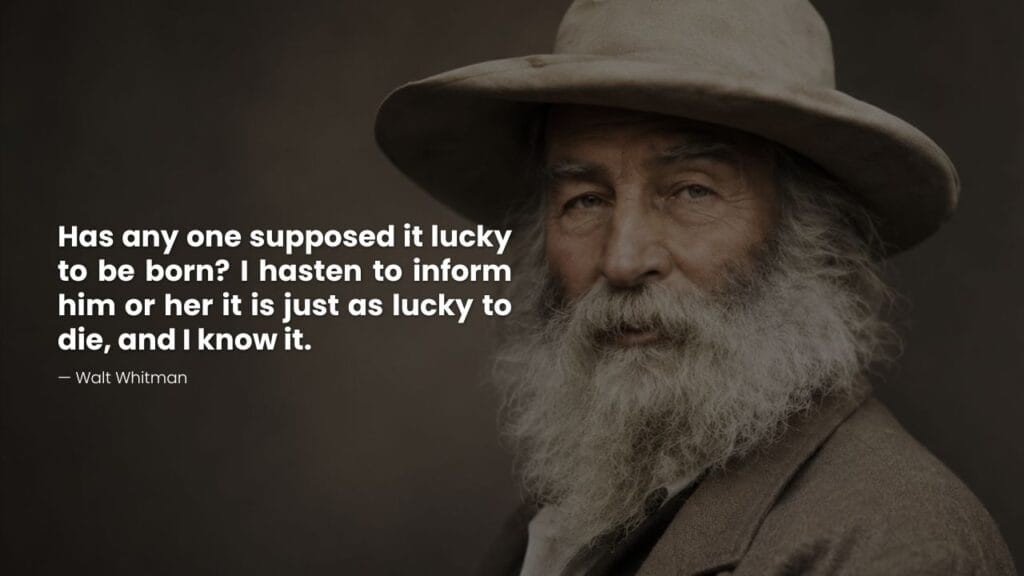
“Has any one supposed it lucky to be born? I hasten to inform him or her it is just as lucky to die, and I know it.”
“And as to you death, and you bitter hug of mortality, it is idle to try to alarm me”
What Does This Quote Mean?
There is no need to fear the end of life, because death is just a natural part of our journey. Even though Walt Whitman calls death a “bitter hug of mortality,” he chooses not to let it scare or control him.
“Sure as Life holds all parts together, Death holds all parts together.”
“And I will show that nothing can happen more beautiful than death.”
“And to die is different from what anyone supposed, and luckier. If no other in the world be aware I sit content, and if each and all be aware I sit content.”
“I bequeath myself to the dirt to grow from the grass I love, If you want me again look for me under your bootsoles.”
What Does This Quote Mean?
Walt Whitman believes that death is not the end, but a return to nature. He pictures his body joining the earth and helping new life grow, such as grass and flowers. When he says, “Look for me under your bootsoles,” He means that although he may be dead, his spirit and influence can still be found in nature.
“The smallest sprout shows there is really no death.”
“Ah the dead to me mar not, they fit well in Nature, They fit very well in the landscape under the trees and grass, And along the edge of the sky in the horizon’s far margin.”
“However convenient this dwelling, we cannot remain here.”
What Does This Quote Mean?
Nothing in life is permanent, no matter how comfortable or familiar it may be. When he mentions a “dwelling,” he is using it as a symbol for our current stage of life, our situation, or even life itself. Life is constantly changing, and sooner or later, we must move on from what is familiar.
The Latest Tips & News
Join our email list to get fresh quotes and useful tips that help you slow down, reflect, and grow — sent right to your inbox.
Why Is Walt Whitman Famous?
Walt Whitman is widely regarded as one of the most influential figures in American literature. He became famous for changing the way poetry was written and for writing in a new and different style.
In the early 1850s, Whitman began writing Leaves of Grass Becuase he believed America needed its own poetic voice. When the book was finished in 1855, he paid for its publication himself and had it printed at a local print shop.
A total of 795 copies were produced, the book gained attention after philosopher Ralph Waldo Emerson praised it and expressed his admiration publicly.
Leaves of Grass was a collection of poems that introduced a new approach to poetry. Instead of following strict rhyme and meter, he used free verse, allowing ideas and emotions to flow more naturally.
Although some earlier examples of English free verse may exist, including translations of the Psalms by John Wycliffe, Whitman popularized the style and helped establish it as a major form of poetry. For this reason, he is often called the Father of Free Verse.
Whitman’s poetry explored themes such as democracy, equality, nature, individuality, and American life. His unique voice and bold ideas influenced generations of writers and poets.
Some of his best-known works include Leaves of Grass, O Captain! My Captain!, Democratic Vistas, and Specimen Days. During the American Civil War, Walt Whitman served as a nurse. His experiences inspired many of his poems and writings.
Whitman continued expanding Leaves of Grass throughout his life, releasing several revised editions. He died on March 26, 1892, in Camden, New Jersey, after years of declining health that followed several strokes. Today, his poems and ideas continue to inspire readers, writers, and scholars around the world.
Walt Whitman Most Famous Poems
Walt Whitman wrote more than 400 poems during his lifetime. He often wrote about democracy, nature, individuality, love, and what it means to be human. People still read and study his poems today.
• Song of Myself (1855)
• I Sing the Body Electric (1855)
• There Was a Child Went Forth (1855)
• Crossing Brooklyn Ferry (1856)
• Out of the Cradle Endlessly Rocking (1859)
• When Lilacs Last in the Dooryard Bloom’d (1865)
• O Captain! My Captain! (1865)
• Drum-Taps (1865)
• Salut au Monde! (1860)
• Song of the Open Road (1856)
These poems show Whitman’s unique style and his creative use of free verse. Among them, Song of Myself and O Captain! My Captain! remain his most widely recognized works.
Key Lessons From Walt Whitman's Poems
Walt Whitman’s poems inspire people to value themselves, connect with others, and learn from their life experiences. Here are some key lessons from three of Walt Whitman most famous poems:
Leaves of Grass
One of the key lessons of Leaves of Grass is to accept yourself, focus on the positive, and appreciate the beauty of everyday life. The poem also teaches respect for nature and highlights how everyone is connected.
Song of Myself
In Song of Myself, Whitman focuses on self-acceptance and personal freedom. He also points out in the poem that everyone is important and should feel free to show who they really are.
There Was a Child Went Forth
In the poem There Was a Child Went Forth, Walt Whitman shows how children learn from the people, places, and events in their lives. The poem teaches us that our experiences and the people we meet help shape our character and the way we see the world.
Conclusion
Walt Whitman still remains one of the most unique and influential voices in American literature. Even during his final days, he stayed committed to his writing. He spent his final years in Camden, New Jersey, where he became completely bedridden. Despite his poor health, he continued to edit his masterpiece, releasing a final version called the deathbed edition.
His health declined so much that in his last week, he was too weak to lift a fork. After his death, more than a thousand people came to his home in just three hours to pay their respects. They filled his coffin with flowers and wreaths, showing the impact he had on people’s lives.
Many of the ideas Whitman wrote about more than 100 years ago still feel relevant today. Walt Whitman quotes and poems remind us to value our individuality, stay open to new experiences, and appreciate the world around us.
I hope these Walt Whitman quotes and his life story inspired you in some way. Peace!!
Frequently Asked Questions
What Was Walt Whitman’s Most Famous Poem?
Walt Whitman’s most famous poem is “Song of Myself.” This poem is the heart of Leaves of Grass and shows his thoughts on individuality, freedom, and what it means to be human.
How Many Poems Did Walt Whitman Write?
No one knows the exact number, but Walt Whitman wrote over 400 poems in his life. Many were revised and republished in different editions of Leaves of Grass.
Which Whitman Book Is His Most Famous?
Whitman’s most famous book is Leaves of Grass. It first came out in 1855 and is still considered one of the most important works in American literature.
Why Was Walt Whitman So Controversial?
Whitman was seen as controversial because his poems talked openly about the body, romantic, personal subjects, and personal freedom. In the 19th century, many people thought these subjects were not suitable for poetry.
Why Is Walt Whitman Important?
Walt Whitman is important because he changed American poetry. He used free verse and wrote about democracy, individuality, and daily life, inspiring many writers who came after him.
Where Is Walt Whitman Buried?
Walt Whitman is buried in the Whitman Mausoleum at Harleigh Cemetery in Camden, New Jersey.